Monument Guide · 2026
Chichen Itza Ball Court: The Great Ball Court and the Maya Ball Game
Size, rules, the stone rings, the sacrifice carvings, the famous echo and how to see the largest ball court in the ancient Americas.
The Great Ball Court at a glance
What is the Great Ball Court at Chichen Itza?
The Great Ball Court at Chichen Itza is the largest of thirteen ball courts built at the site, standing just north-west of El Castillo. It hosted pok ta pok, a ritual ball game tied to the struggle between day and night rather than ordinary sport, and remains the best preserved court at Chichen Itza.
A ritual arena
The ball game was played across Mesoamerica for close to three thousand years. It re-enacted a cosmic struggle between day and night, life and death, rather than acting as entertainment.
Thirteen courts
Chichen Itza has thirteen ball courts, more than almost any other Maya city. The Great Ball Court is the largest and the best preserved.
Its Maya name
Modern Yucatec Maya revivals of the game are known as Pok ta Pok, a name now widely used for the ancient sport as well.
When it was built
The court was completed during the city's peak, roughly in the 10th to 12th centuries, in the same building phase as the main pyramid.
How Big is the Chichen Itza Ball Court?
The Great Ball Court at Chichen Itza is the largest ancient ball court known in the Americas, with a playing alley longer than a football pitch and side walls taller than a two-storey house. Two stone rings sit high on those walls, and six temple structures frame the open playing space.
Length
About 168 metres (551 feet) overall, with a playing alley roughly 96 metres long between the end zones.
Width
About 70 metres (230 feet) across, with the alley itself around 30 metres wide.
Wall height
The parallel side walls stand about 8 metres (26 feet) high, sloped at the base and vertical above.
The rings
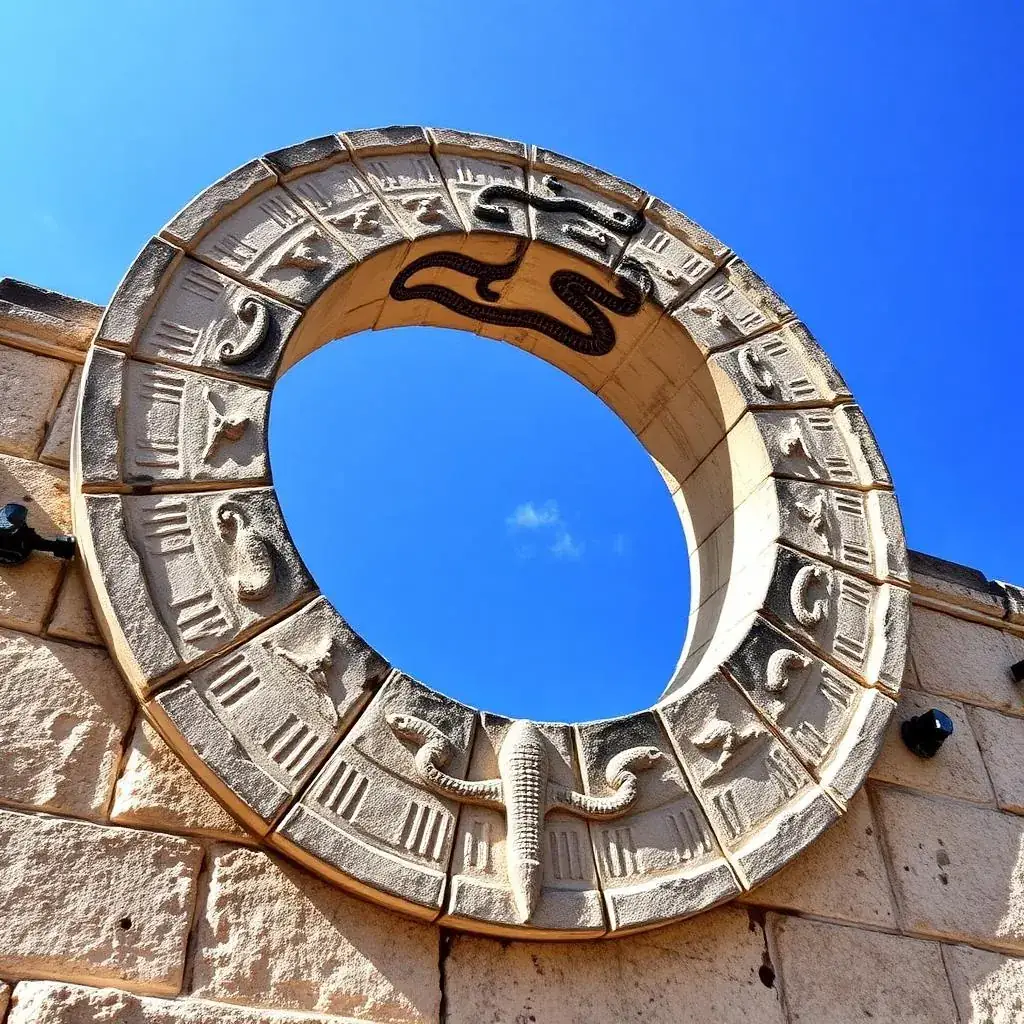
Two carved stone rings are set into the walls about 6 metres above the floor, each decorated with intertwined feathered serpents.
Six temples
Structures frame the court, including the Temple of the Jaguars on the east wall and the North Temple at the far end.
Largest in the Americas
No larger pre-Columbian ball court has been recorded anywhere in Mesoamerica.
| Feature | Measurement | Note |
|---|---|---|
| Playing alley length | ~96 m (315 ft) | Between the end zones |
| Width | ~70 m (230 ft) | Alley itself about 30 m wide |
| Wall height | ~8 m (26 ft) | Sloped base, vertical above |
| Ring height above floor | ~6 m (20 ft) | Two rings, one per wall |
| Ring diameter | ~1 m (3 ft) | Carved with feathered serpents |
| Ball courts at Chichen Itza | 13 known | Great Ball Court is the largest |
| Date built | ~864 CE | Same building phase as El Castillo |
How the Maya Ball Game Was Played
The Maya ball game at Chichen Itza was played by keeping a heavy solid rubber ball moving with hips, thighs and elbows, never with hands or feet. Rules survive only in part, reconstructed from carved reliefs, painted pottery and the Popol Vuh, since no written rulebook has ever been found.
The basic play
The ball was put into play by hand, then kept moving with hips, thighs and elbows. Using hands or feet during the rally was not allowed.
The stone ring
Passing the ball through a ring six metres up was extremely difficult and may have ended the match immediately when it happened.
Team size
Depictions show one against one, pairs and small teams. The exact number of players and the scoring system are unknown.
Not a spectator sport
The alley is narrow and the walls are high, so audiences watched from the surrounding structures during ceremonies, not from stands.
The modern revival
Pok ta Pok is played today in Yucatan towns as a cultural revival, sometimes with a flaming ball at night shows.
The Rubber Ball and the Players' Gear
The rubber ball used in the Chichen Itza ball game was a Mesoamerican invention with no European equivalent at the time, made from tapped latex processed to bounce and hold its shape. Players wore hip yokes, padding, gloves and sometimes helmets to survive direct hits from the heavy solid ball.
Solid rubber
Balls were made from latex tapped from rubber trees, processed with morning glory vine sap to make it bounce and hold shape.
Weight
Estimates run from about 3 to 5 kilos for larger game balls, heavy enough to break bones on a direct hit.
Protective gear
Players wore thick hip yokes, knee and elbow padding, gloves and sometimes helmets. Stone versions of the yokes survive in museums.
Size range
Carved scenes show balls from hand-sized up to larger than a modern football, so the equipment probably varied by version of the game.
Sacrifice and the Carved Stone Panels
The carved stone panels at the Great Ball Court run along the base of the walls and show a decapitation scene linked to the ball game ritual. Six panels in total depict the sacrifice, and they explain why this court is so closely associated with ceremonial death rather than ordinary competition.
The decapitation scene
The central panel shows a kneeling player who has been decapitated, with serpents and a plant emerging from the neck as a symbol of fertility and renewal.
Winner or loser?
Which team was sacrificed is still debated. Some readings suggest the losing captain, others the winning captain as an honour. The carving does not settle it.
How often
There is no evidence that every match ended in sacrifice. The ritual was tied to specific ceremonial occasions, not to routine play.
The wider context
Offerings at the Sacred Cenote and the skull platform nearby belong to the same ritual landscape around the plaza.
The Acoustics of the Ball Court
The acoustics of the Great Ball Court let a voice at one end temple carry clearly to the temple 135 metres away without shouting. The long parallel walls and closed ends channel sound down the alley, an effect visitors can test today by speaking or clapping inside the ancient court.
End to end speech
A voice at the North Temple can be heard clearly at the temple 135 metres away at the south end, without shouting.
The repeating clap
A single handclap in the alley returns as a series of echoes off the parallel walls.
Why it happens
The long parallel walls and the closed ends channel and reflect the sound instead of letting it disperse.
Design or accident
As with the pyramid echo, researchers disagree on whether the Maya engineered the effect, but ceremonies clearly used it.
The Temple of the Jaguars and the North Temple
The Temple of the Jaguars sits built into the east wall of the Great Ball Court, carrying a frieze of jaguars advancing toward a round shield and painted battle murals inside its upper chamber. The North Temple faces it at the far end and serves as the acoustic focus of the court.
Temple of the Jaguars
Built into the east wall, its frieze shows pairs of jaguars advancing towards a round shield, with plumed serpents above.
The jaguar throne
A stone jaguar figure sits at the lower entrance, which is why the structure carries the name.
Interior murals
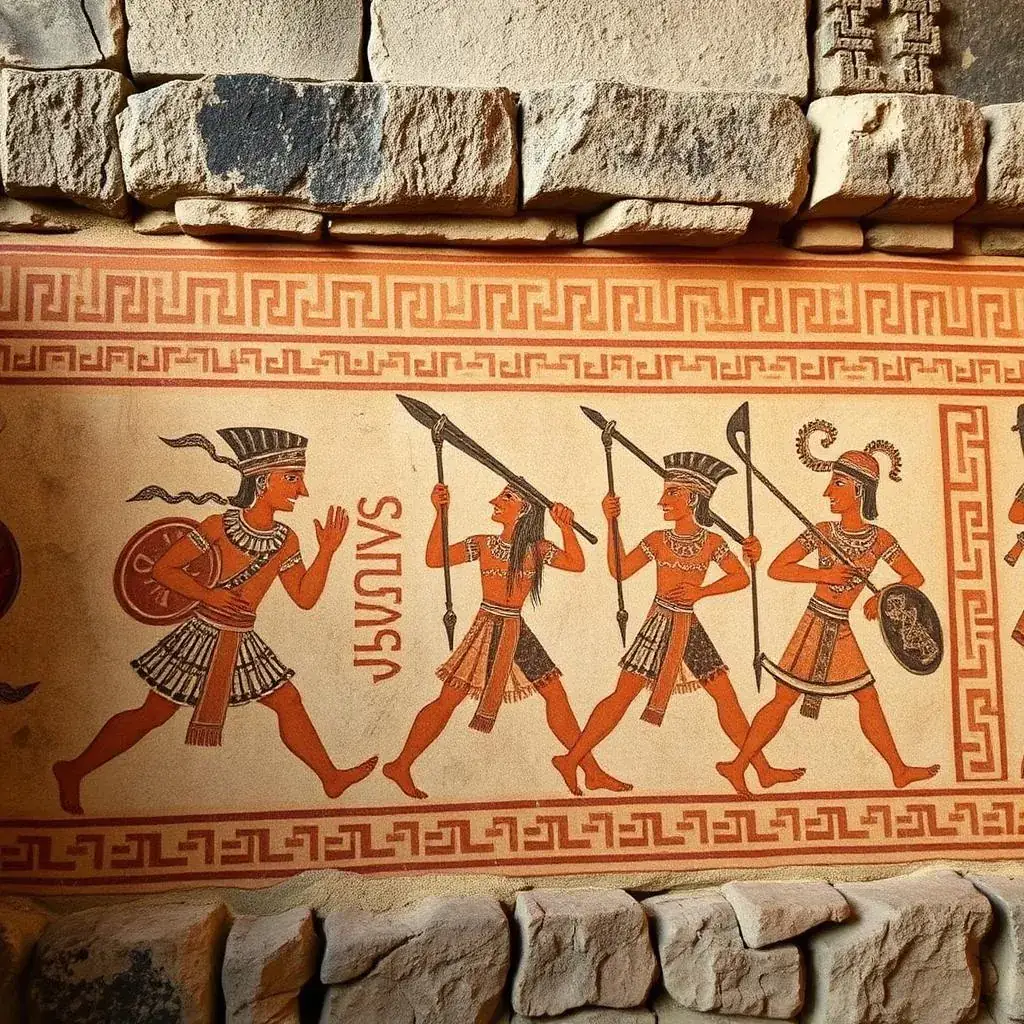
The upper chamber holds painted battle scenes, among the most detailed murals surviving at Chichen Itza.
North Temple
Also called the Temple of the Bearded Man, its inner walls carry fine reliefs and it is the acoustic focus at the north end.
Visiting the Ball Court Today
The Great Ball Court at Chichen Itza sits a two-minute walk from the main pyramid and takes about twenty minutes to see properly. Visitors walk the length of the playing alley, though the temples stay fenced off, so checking the opening hours guide before arrival helps plan the rest of the day.
Where it is
Immediately north-west of El Castillo, along the main path from the entrance.
Can you walk inside?
Yes. Visitors walk the length of the playing alley, though the temples and the upper structures are fenced off.
Best light
Morning light hits the east wall and the Temple of the Jaguars. The carved panels are easiest to read before midday.
See it with a guide
The panels and the acoustics make far more sense with an explanation. A guided Chichen Itza tour covers the court in detail.
Nearby monuments
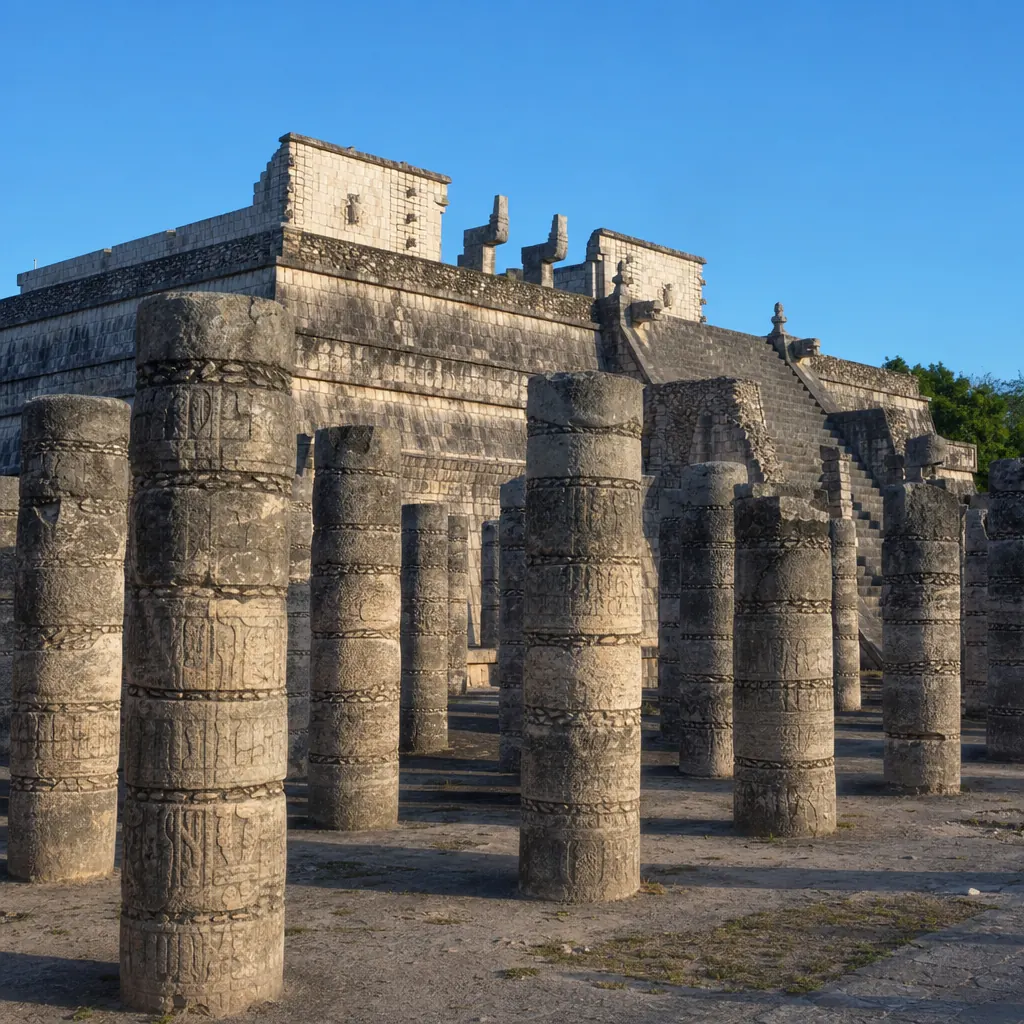
The Temple of the Warriors and the Sacred Cenote are both a short walk from the court.
Walk the Great Ball Court with a certified guide
Day trips from Cancun, Playa del Carmen, Tulum, Riviera Maya and Merida with hotel pickup, tickets handled and a guide who reads the carved panels with you.
Plan my visit on WhatsApp