Monument Guide · 2026
Temple of the Warriors, Chichen Itza: Columns, Chac Mool and History
The pyramid with a thousand columns: what it was for, the carved warrior pillars, the reclining Chac Mool and how to see it on a visit.
The Temple of the Warriors at a glance
What is the Temple of the Warriors?
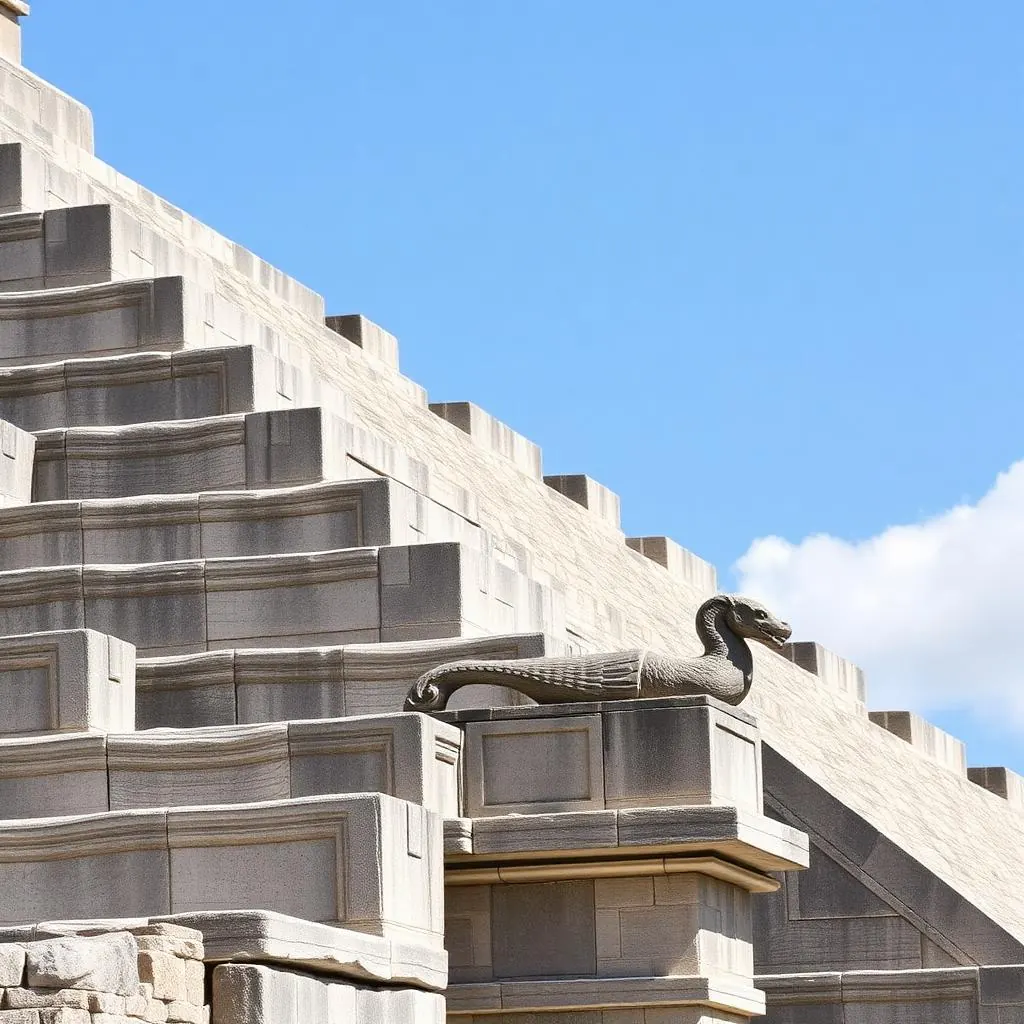
The Temple of the Warriors is a stepped pyramid temple at Chichen Itza that faces El Castillo across the main plaza, ranking as the site's second most photographed building. Named for the carved warrior columns lining its front, it was built during the city's main construction phase and originally held ceremonies inside a colonnaded hall rather than an elite chamber.
Where the name comes from
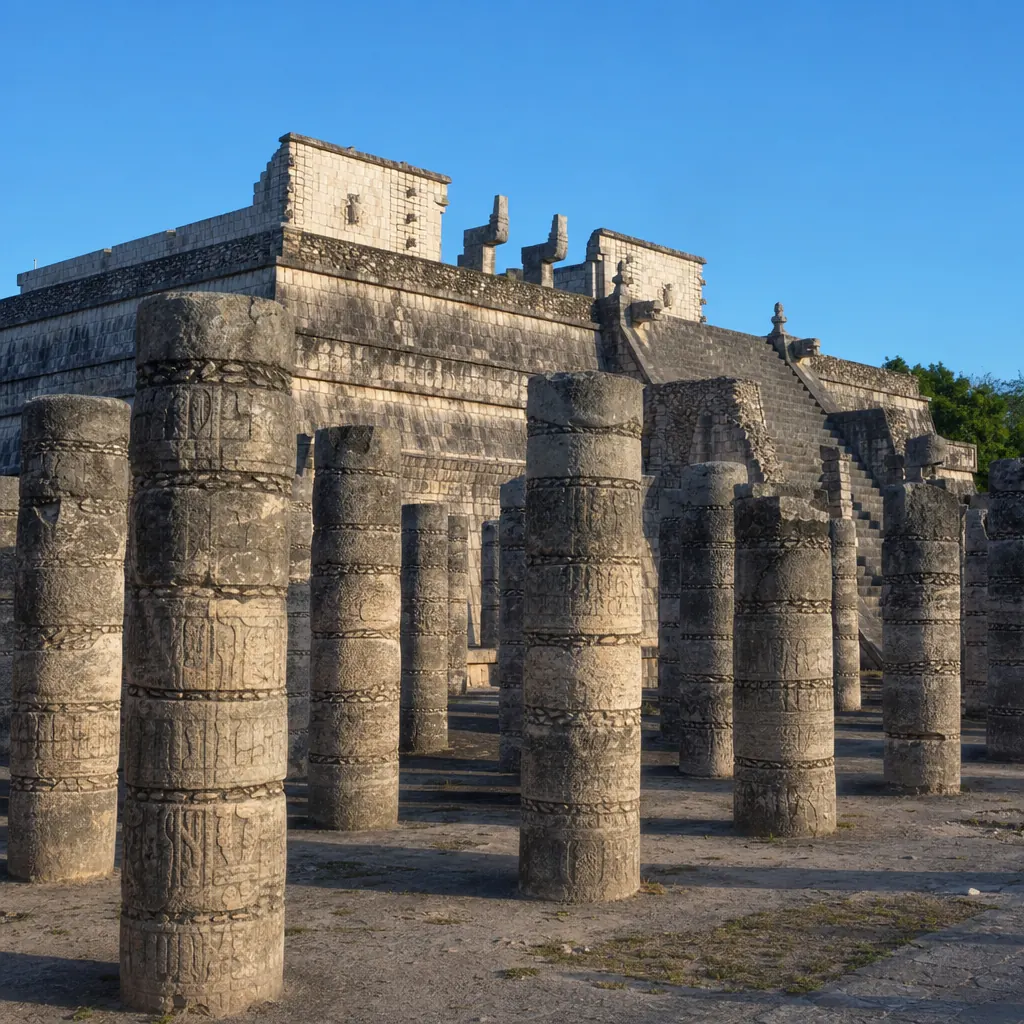
The square columns in front of the temple are carved with warrior figures, so early archaeologists named the whole structure after them.
What it was used for
It was a temple raised over a colonnaded hall, a space large enough for substantial gatherings and ceremonies rather than for a small elite.
When it was built
It belongs to the city's main building phase, roughly the 10th to 12th centuries, the same period as the pyramid and the Great Ball Court.
How to spot it
Look east from El Castillo for a wide stepped platform with a forest of stone pillars spread out in front of it.
Size, Layout and the Thousand Columns
The Temple of the Warriors covers a wide four-tiered platform fronted by rows of stone columns, making it one of the largest built groups at Chichen Itza. Its low height contrasts with its footprint, since the colonnade around it, known as the Group of a Thousand Columns, once supported wooden roofs over a covered gallery bordering the plaza.
Dimensions
About 12 metres (40 feet) high and 40 metres (133 feet) wide, built in four stepped tiers.
The staircase
A broad stairway climbs the west face, flanked by plain sloped ramps that once held standard-bearer figures.
Group of a Thousand Columns
Rows of round and square columns extend south and west of the temple. The count runs into the hundreds and the name is a round-number nickname, not a census.
A roofed hall
The columns originally supported wooden beams and a flat roof, creating a covered gallery around the plaza.
Painted originally
Traces show the columns were plastered and painted in bright colours, so the group looked nothing like the bare grey stone visitors see now.
| Feature | Detail | Note |
|---|---|---|
| Height | About 12 m (40 ft) | Measured from plaza level to the upper platform |
| Base width | About 40 m (133 ft) | Spread across four stepped tiers |
| Date built | Around 1200 CE | City's main construction phase |
| Architectural style | Chichen Itza / Toltec style | Shares features with Tula, Hidalgo |
| Columns in the group | Hundreds | Group of a Thousand Columns is a nickname |
| Chac Mool position | Upper platform | Between two feathered serpent columns |
| Access for visitors | Viewed from ground level | Climbing prohibited since 2006 |
The Chac Mool at the Top
The Chac Mool at the top of the Temple of the Warriors is a half-reclining stone figure with its head turned to the side, holding a flat dish once used for offerings. It rests between two feathered serpent columns and ranks among the most recognisable sculptures in Mesoamerican art, though its modern name dates only to the 1870s.
What a Chac Mool is
A half-reclining human figure, head turned 90 degrees to the side, holding a flat dish or bowl on the stomach.
What it held
The dish received offerings during ceremonies. Interpretations range from food and incense to blood offerings.
Where the name came from
The term Chac Mool was invented in the 1870s by explorer Augustus Le Plongeon and is not an ancient Maya word.
Serpent columns
Two columns carved as feathered serpents stand at the temple doorway, their heads at the base and tails once supporting the lintel.
The Carved Warrior Columns
The carved warrior columns in front of the Temple of the Warriors show armed figures in feathered headdresses holding spear-throwers, darts and shields, each carved individually rather than repeated from a single mold. Differences in costume and ornament across columns suggest specific people or ranks, and eagle and jaguar reliefs nearby link the temple to warrior orders found across Mesoamerica.
Who is shown
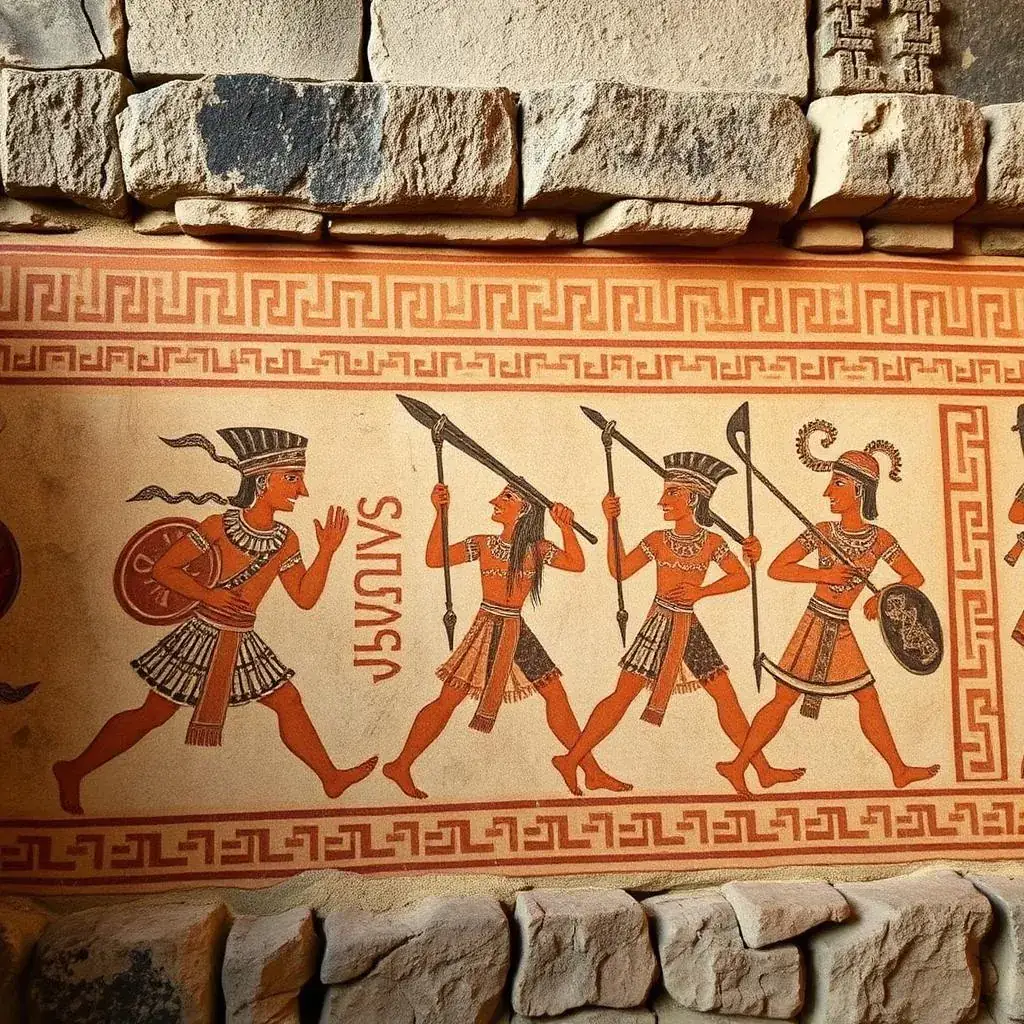
Armed figures in feathered headdresses, carrying spear-throwers, darts and shields, each one individually carved.
Not identical
Costume details, headdresses and ornaments differ from column to column, which suggests specific people or ranks rather than a generic pattern.
Other reliefs
Panels on the temple show eagles and jaguars holding human hearts, an image tied to warrior orders across Mesoamerica.
Reassembled sections
Many columns were re-erected during the Carnegie Institution excavations of the 1920s and 1930s, so some joints are modern.
The Temple Buried Inside
The Temple of the Chac Mool is an earlier structure buried inside the Temple of the Warriors, discovered when Carnegie Institution archaeologists tunnelled into the pyramid during the 1920s and 1930s. Because it stayed sealed for centuries, its painted decoration and murals survived far better than anything exposed on the exterior, though the interior remains closed to visitors today.
The Temple of the Chac Mool
The buried earlier temple is named after a Chac Mool figure found inside it, complete with a helmet-like headdress and a belt with carved heads.
Preserved colour
Because the inner temple was sealed, some of its painted decoration and mural work survived far better than anything exposed outside.
How it was found
Carnegie Institution archaeologists tunnelled into the structure in the 1920s and 1930s and documented the interior in detail.
Access
The interior is closed to visitors. Photographs and finds are shown in museum collections instead.
Why It Looks Like Tula
The Temple of the Warriors shares colonnaded halls, warrior columns, Chac Mool figures and serpent columns with Pyramid B at Tula, the Toltec capital far to the north. Earlier scholars saw a Toltec invasion of Yucatan, but most researchers today describe a shared style spread through trade and alliance. Read more in the Chichen Itza history and facts guide.
The similarity
Colonnaded halls, warrior columns, Chac Mool figures and serpent columns appear at both sites in a closely related style.
The old theory
Earlier scholars explained this as a Toltec invasion of Yucatan that imposed central Mexican architecture on the Maya city.
The current view
Most researchers now describe a shared international style spread through long-distance trade, alliance and exchange, with influence running in both directions.
Where to read more
The debate is covered in the Chichen Itza history and facts guide.
Visiting the Temple of the Warriors
Visiting the Temple of the Warriors takes fifteen to twenty minutes from the pathway east of the main pyramid, a short walk that most tour routes cover on the way toward the ball court. Climbing is prohibited, so the Chac Mool and serpent columns are viewed from ground level. Check the opening hours guide when planning your route.
Can you climb it?
No. Climbing has been prohibited since 2006 and a rope line keeps visitors at the base.
Can you see the Chac Mool?
Only from below and at a distance. A zoom lens or binoculars help, and the top is easier to make out from the north-west corner.
Best light
Late morning and early afternoon light the west face and the staircase. Early morning leaves the front in shadow.
Walk the columns
Most visitors photograph the temple and move on. Walking the colonnade south of it is quieter and shows the scale of the group.
See it with a guide
A guided Chichen Itza tour reads the warrior carvings with you, or take a private Chichen Itza tour to move at your own pace.
See the Temple of the Warriors with a certified guide
Day trips from Cancun, Playa del Carmen, Tulum, Riviera Maya and Merida with hotel pickup, entrance tickets handled and a guide who explains the carvings building by building.
Plan my visit on WhatsApp