Sacred Cenote at Chichen Itza: History, Sacrifices & Visitor Guide (2026)
What Is the Sacred Cenote?
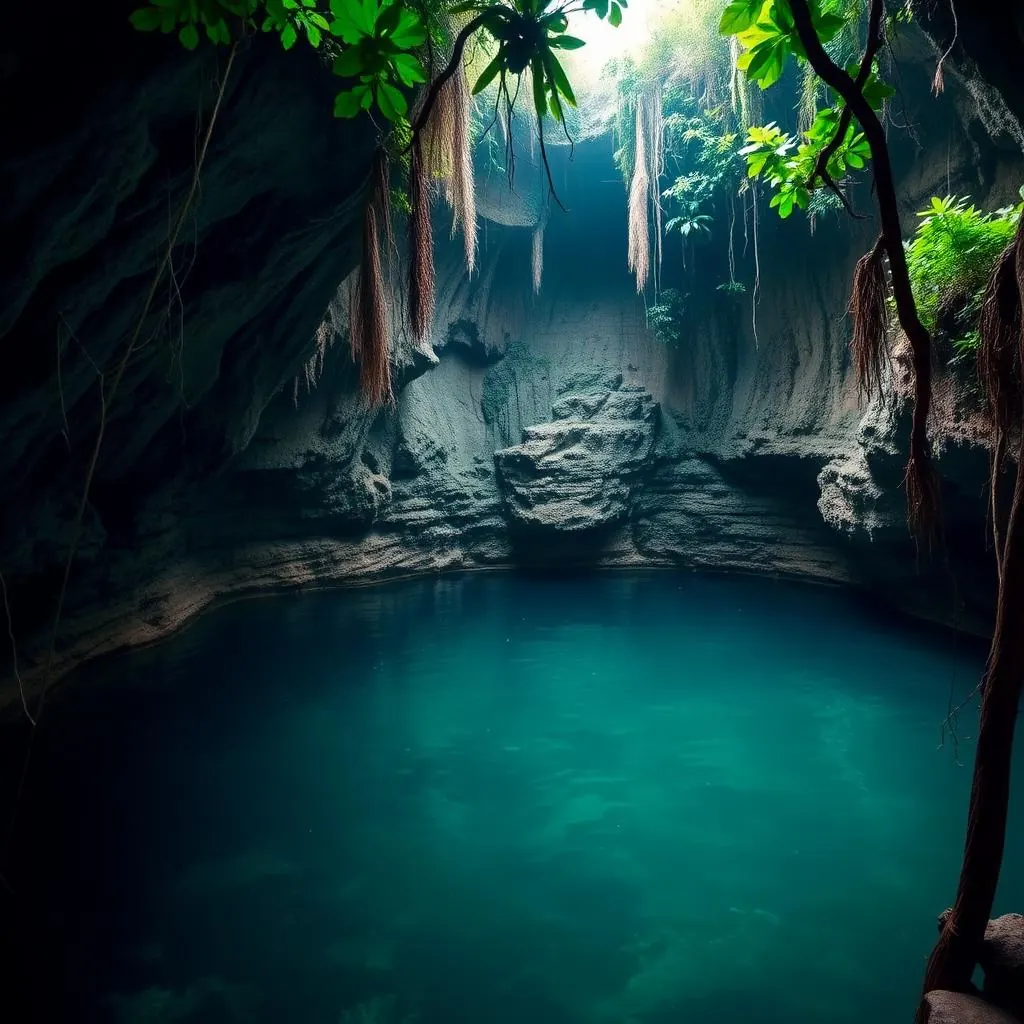
The Cenote Sagrado ("Sacred Well") is a natural limestone sinkhole roughly 60 meters in diameter and 27 meters deep, with near-vertical walls dropping 20 meters to a dark green water surface. Below the water lies another 13 meters of anaerobic sediment where offerings have been preserved for over a millennium. GPS: 20.6863° N, 88.5677° W, at the north end of the ceremonial Sacbé (white road) leading from El Castillo.
The Yucatán peninsula has no surface rivers - rainwater drains straight through the porous limestone. Cenotes were therefore the only source of fresh water and, to the Maya, the doorways of Chaac's realm. Chichen Itza was built around two of them: the Cenote Xtoloc for drinking water, and the Cenote Sagrado reserved entirely for ritual.
Sacred Cenote at a Glance
| Diameter | ~60 m (200 ft) |
|---|---|
| Total depth | 27 m water + 13 m sediment |
| Water level below rim | ~20 m (65 ft) |
| Distance from El Castillo | ~300 m (5-min walk north) |
| Swimming | Prohibited - protected archaeological site |
| Entry fee | Included in Chichen Itza ticket |
| Coordinates | 20.6863° N, 88.5677° W |
The Ancient Maya Sacrifices
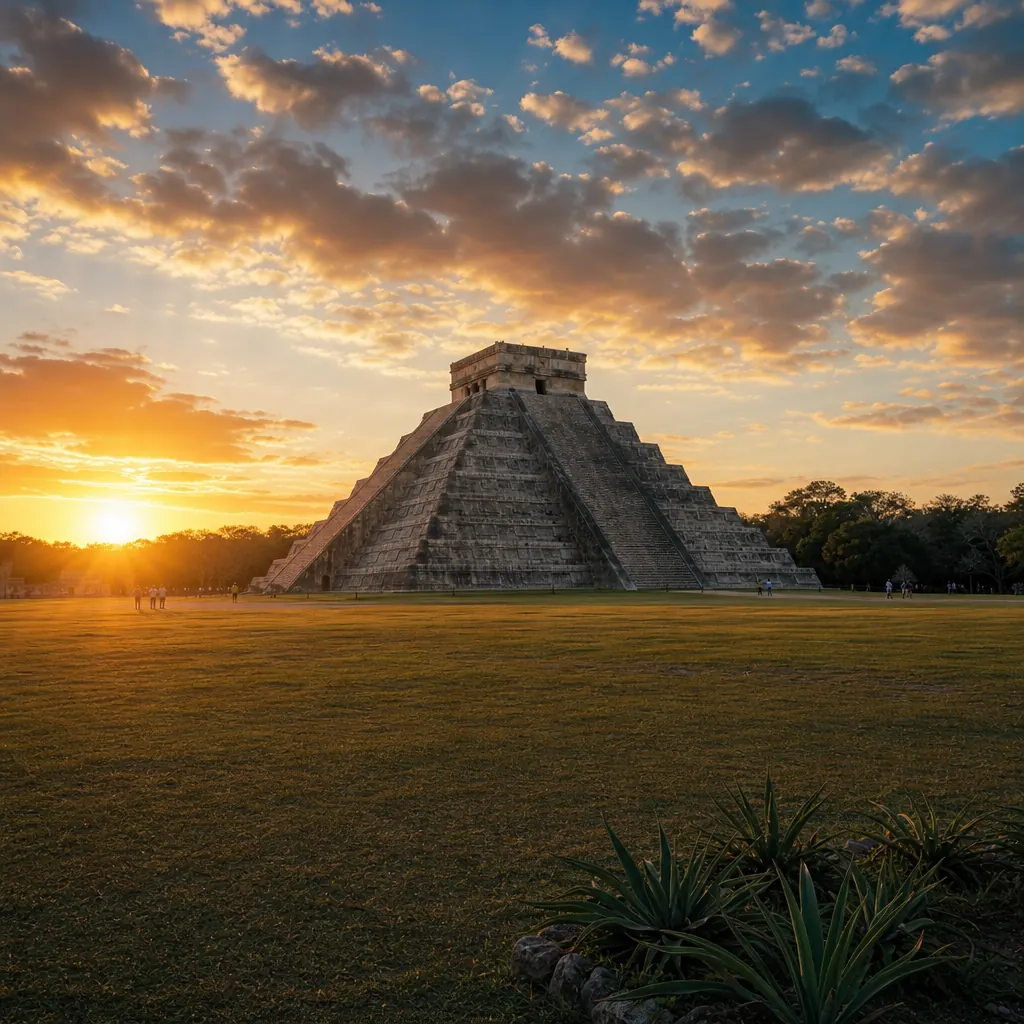
Colonial-era chronicler Diego de Landa recorded in 1566 that the Maya threw "living men in sacrifice, believing that they did not die though they never saw them again." His account was long dismissed as exaggeration - until 20th-century dredging pulled the skeletons out.
Archaeologist Ernest Hooton analyzed 42 individuals recovered by Edward Thompson's dredge in 1940 and found men, women and children, with young men and children predominating. Later expeditions raised the total to at least 127 sacrificed individuals. Some had been ritually killed before being thrown in; others were dropped alive during drought years to petition Chaac for rain.
The full context of Maya ritual and cosmology is covered in our Chichen Itza history and facts guide.
What Was Found in the Sacred Cenote
Between 1904 and 1911, U.S. consul Edward H. Thompson - who had bought the Chichen Itza hacienda - dredged the cenote with a bucket crane, shipping thousands of artifacts to Harvard's Peabody Museum (many were later repatriated). Mexican expeditions in 1960–61 under Norman Scott used airlifts and scuba divers to recover thousands more. The catalog is remarkable:
| Offering | Details |
|---|---|
| Discos de oro / Gold discs | Repujados con escenas de guerra maya - ~30 recuperados |
| Jade | Miles de cuentas, pendientes, máscaras y figuras |
| Cobre | Cascabeles, hachas ceremoniales, discos |
| Obsidiana | Cuchillos de sacrificio y puntas de lanza |
| Copal | Incienso maya quemado en las ofrendas |
| Restos humanos | Al menos 127 individuos - hombres, mujeres y niños |
| Textiles y madera | Preservados en el lodo anaeróbico |
Some of the gold discs bore repoussé scenes of Maya warriors defeating enemies - imported from as far as Panama and Colombia, confirming Chichen Itza's role as a long-distance trade capital of the Postclassic Maya world.
Chaac and the Cult of the Rain God
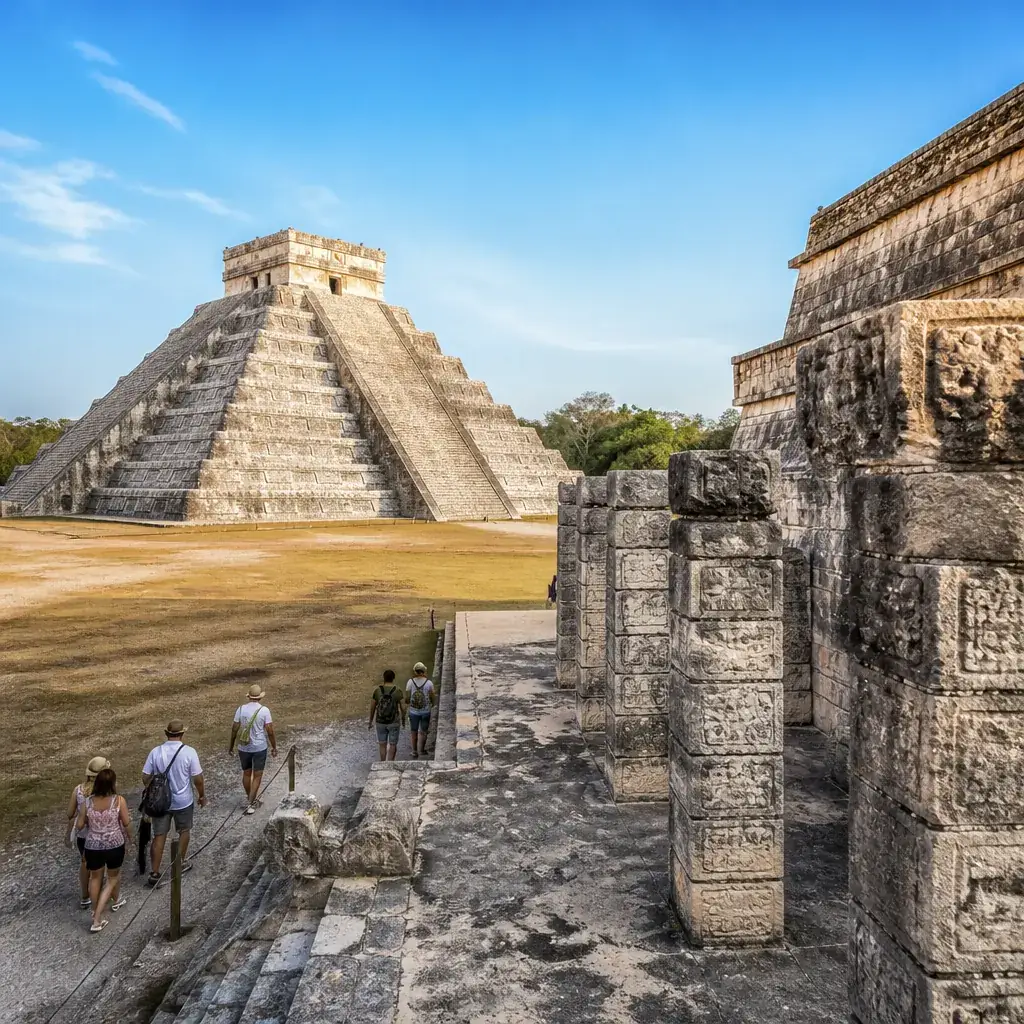
Chaac (Chak, Chaak) is the Maya rain god - depicted with a long curling snout, fangs and a lightning axe. Four Chaacs, one for each cardinal direction, poured rain from cosmic gourds. In a limestone country with no rivers, Chaac's mood was survival: a good rainy season meant maize; a drought meant famine.
The Sacred Cenote was Chaac's most direct address. Its dark still water - 20 meters below the rim, unreachable by ordinary means - mirrored the sky and hid the underworld. Offerings dropped in could not be retrieved, which is exactly what made them offerings. The greater the value cast down (gold, jade, a human life), the greater the petition.
Sacred Cenote vs Ik Kil - Don't Confuse Them
First-time visitors often plan to "swim in the Sacred Cenote." You cannot. This is the single most common Chichen Itza mix-up. The two cenotes are separate places with opposite purposes:
| Feature | Sacred Cenote | Ik Kil |
|---|---|---|
| Location | Inside Chichen Itza site | 3 km east on Hwy 180 |
| Swimming | Prohibited | Allowed (life jacket) |
| Depth | 27 m water + sediment | 40 m |
| Fee | Included in ruins ticket | MX$150 separate |
| Age of use | Ritual since ~600 AD | Eco-park since 1990s |
| Best for | History, photos from rim | Swimming, cooling off |
To do both in one day - history at the Sacred Cenote, swim at Ik Kil - see the itinerary in our Ik Kil Cenote guide or book a Chichen Itza + cenote tour that packages both.
How to Visit the Sacred Cenote
The Sacred Cenote is at the north end of Chichen Itza, reached by a wide, flat Sacbé (white road) that leaves El Castillo's north face. It is a 5-minute walk (~300 m) - the path is shaded in patches, and vendors line both sides.
- Enter Chichen Itza at the main gate (opens 08:00).
- Walk to El Castillo - the central pyramid.
- Take the wide path leading north from El Castillo.
- Follow the Sacbé for 5 minutes to the wooden viewing platform.
- Read the interpretive panel; look but do not descend.
Timing: the north Sacbé is shadeless around noon - visit it early in your loop (09:00–10:00) before the sun hits full strength. See our Chichen Itza crowd-avoidance guide for the full route order.
Where the Artifacts Are Today
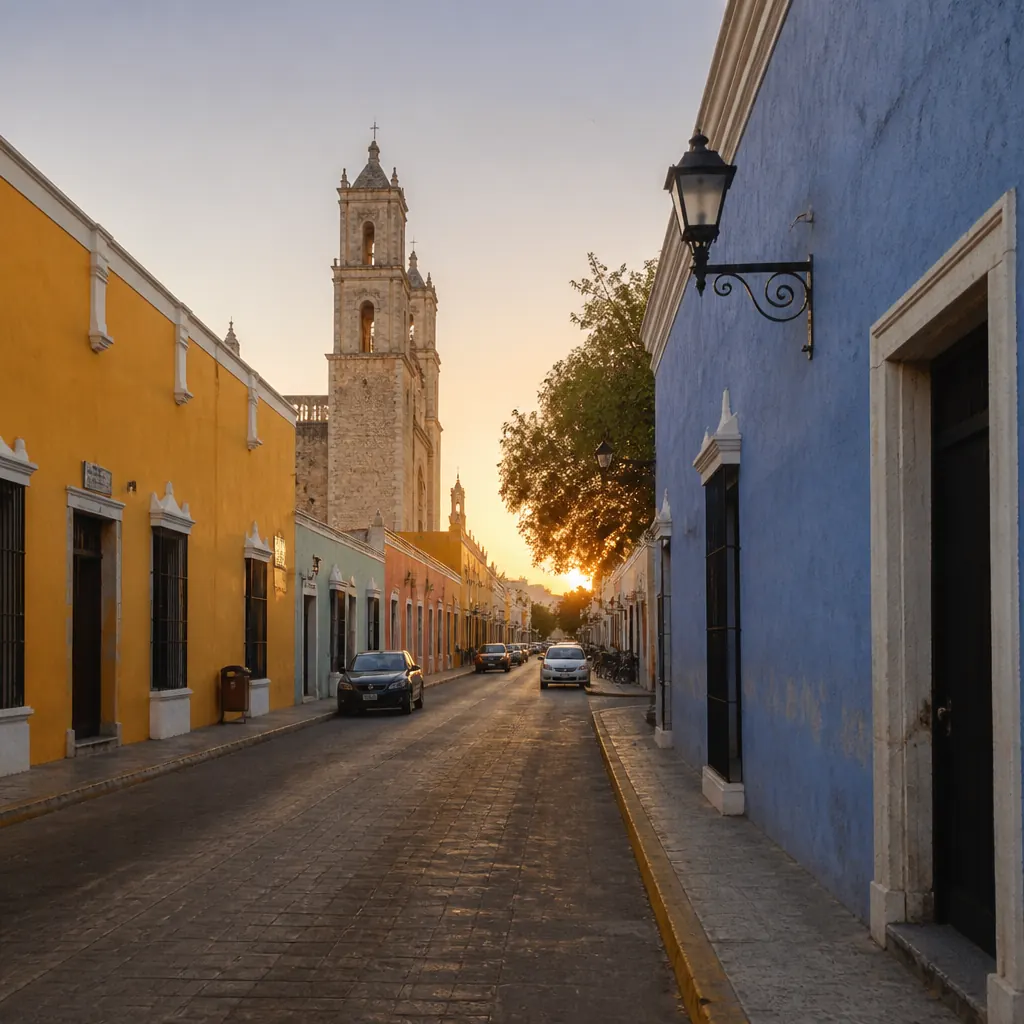
- Museo Nacional de Antropología, Mexico City - the largest Sacred Cenote gold and jade collection on public display.
- Peabody Museum of Archaeology and Ethnology, Harvard (Cambridge, MA) - Thompson's original 1904–11 dredge catalog; partially repatriated.
- Museo Regional de Antropología Palacio Cantón, Mérida - regional Yucatán finds and photographs from the 1961 expedition.
- Chichen Itza site museum (currently closed for renovation) - small display of local finds; expected to reopen 2026.
Key Takeaways
- The Sacred Cenote is inside Chichen Itza - the ancient Maya well of sacrifice to Chaac.
- 27 m deep, 60 m wide, 300 m north of El Castillo via the Sacbé road.
- Not swimmable - swimming, wading and touching the water are all prohibited.
- Included in the Chichen Itza entrance fee - no separate ticket.
- At least 127 sacrificed individuals and thousands of gold, jade and obsidian offerings recovered.
- For a swim, go to Ik Kil (3 km east) or Yokdzonot (30 min west).
- Plan 15–20 minutes; visit in the morning while the north path still has shade.
Sacred Cenote - Frequently Asked Questions
Visit Chichen Itza with a certified Maya-history guide
Our small-group and private tours cover the Sacred Cenote, El Castillo, the Ball Court and the Observatory - with buffet and Ik Kil swim included.
Ask on WhatsApp