Insider Guide · 2026
Chichen Itza Equinox 2026: Kukulkán Serpent Shadow, Dates, Times & Crowds
The Kukulkán serpent descends El Castillo twice a year - here's exactly when to go, what to expect and how to actually see it without the chaos.
Quick answer
What Is the Chichen Itza Equinox Phenomenon?
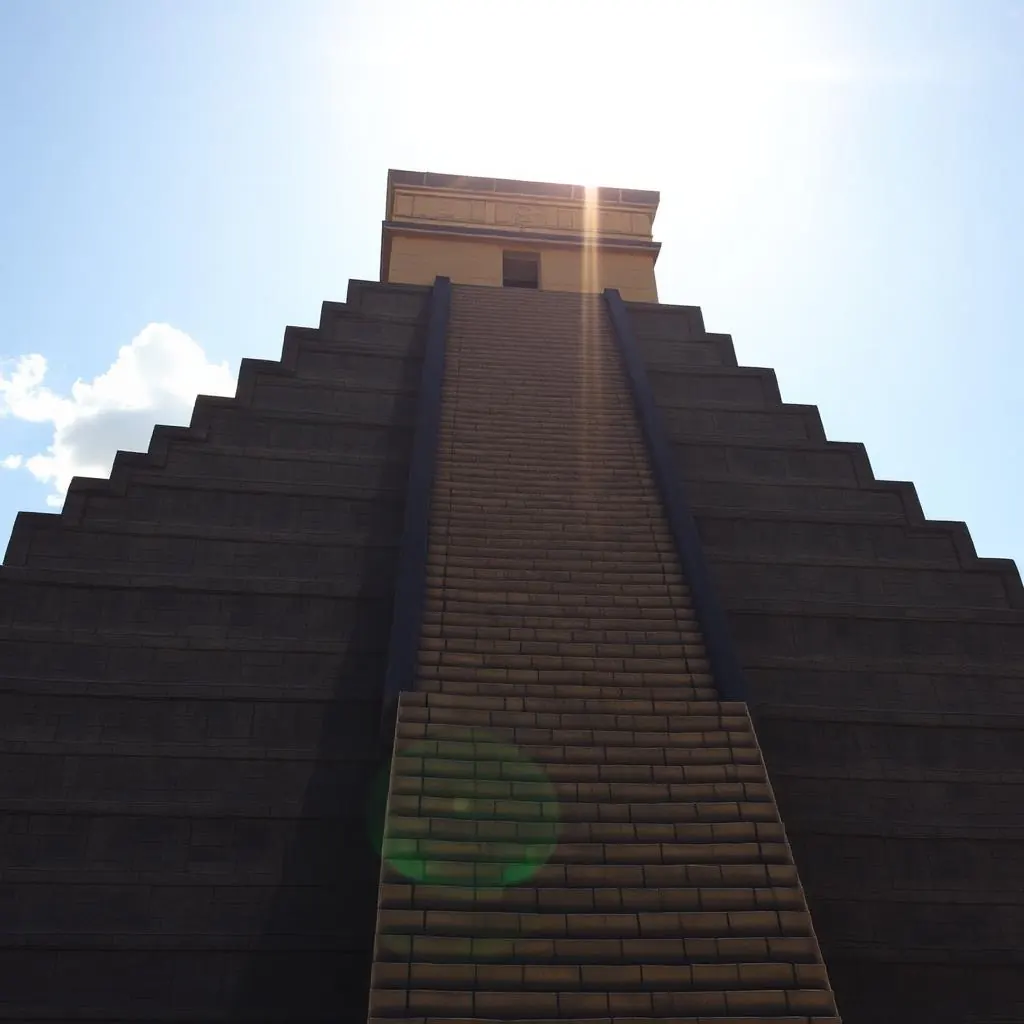
Twice a year, sunlight and shadow combine on El Castillo's north staircase to form the illusion of a serpent slithering down the pyramid - the feathered god Kukulkán returning to earth.
The Serpent Illusion
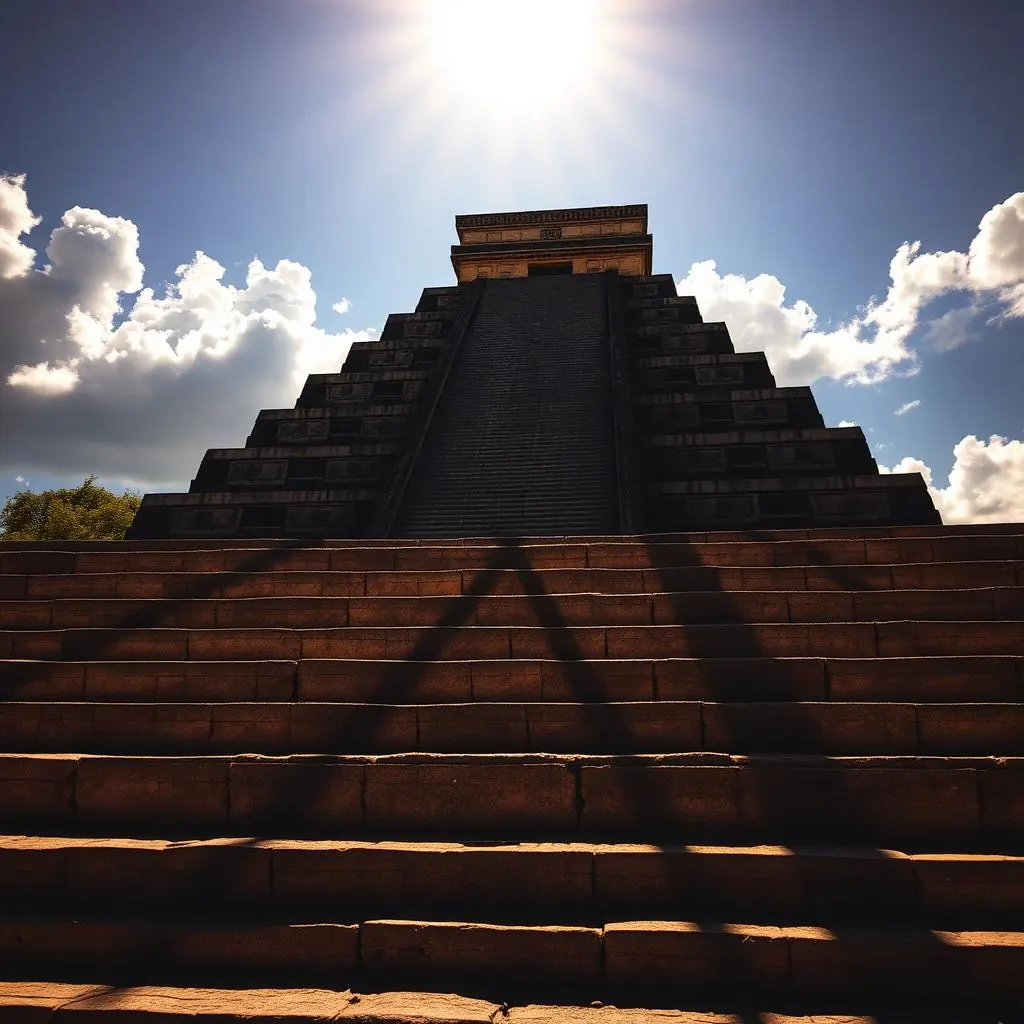
Late-afternoon sun strikes the pyramid's northwest edge. Seven triangles of light and shadow appear on the balustrade, ending at the giant stone serpent's head at the base.
Designed, Not Accidental
The Maya engineered El Castillo's angles so that on the equinoxes, the effect is nearly perfect - proof of astronomical mastery over 1,000 years ago.
How Long It Lasts
The full illusion is visible for about 45 minutes, roughly 3:00–5:00 PM (site closes at 5 PM). It peaks in intensity around 4:00–4:30 PM.
The God Kukulkán
Kukulkán is the Maya feathered serpent - equivalent to the Aztec Quetzalcoatl. The pyramid is his temple; the equinox marks his descent to bless the earth.
Chichen Itza Equinox 2026 Dates
There are two equinoxes each year. Spring is the famous one, but autumn has the same effect with fewer people.
Spring Equinox 2026
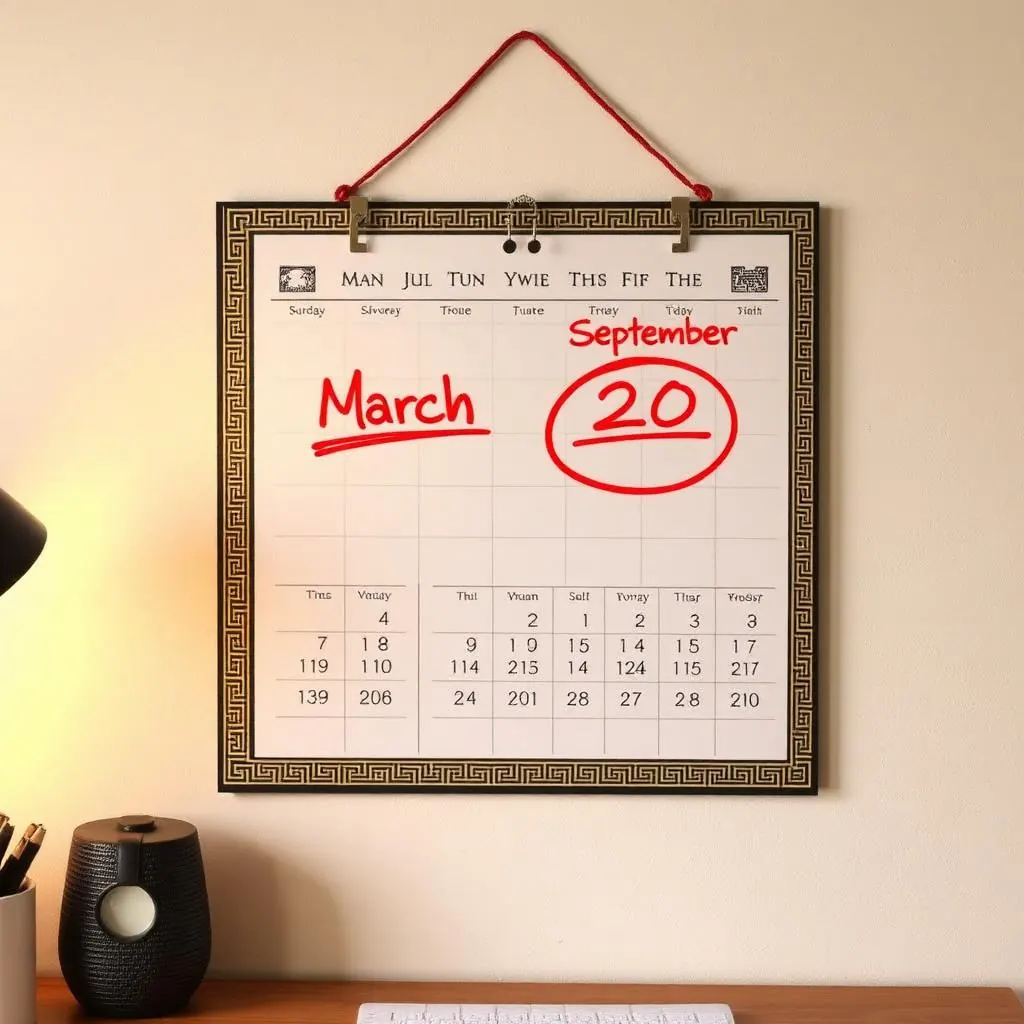
Peak: Friday, March 20 & Saturday, March 21. Visible from March 17–24. The most famous and most crowded date.
Autumn Equinox 2026
Peak: Monday, September 21 & Tuesday, September 22. Visible from September 19–25. Same phenomenon, notably fewer visitors.
Best Days for the Shadow
The exact equinox day and the day after tend to show the clearest, sharpest serpent. Cloudy afternoons kill the effect - check the forecast.
Extended Site Hours
For equinox days, INAH usually extends hours until 6 PM (from the standard 5 PM close). Confirm with the site before your visit.
What Time Does the Serpent Shadow Appear?
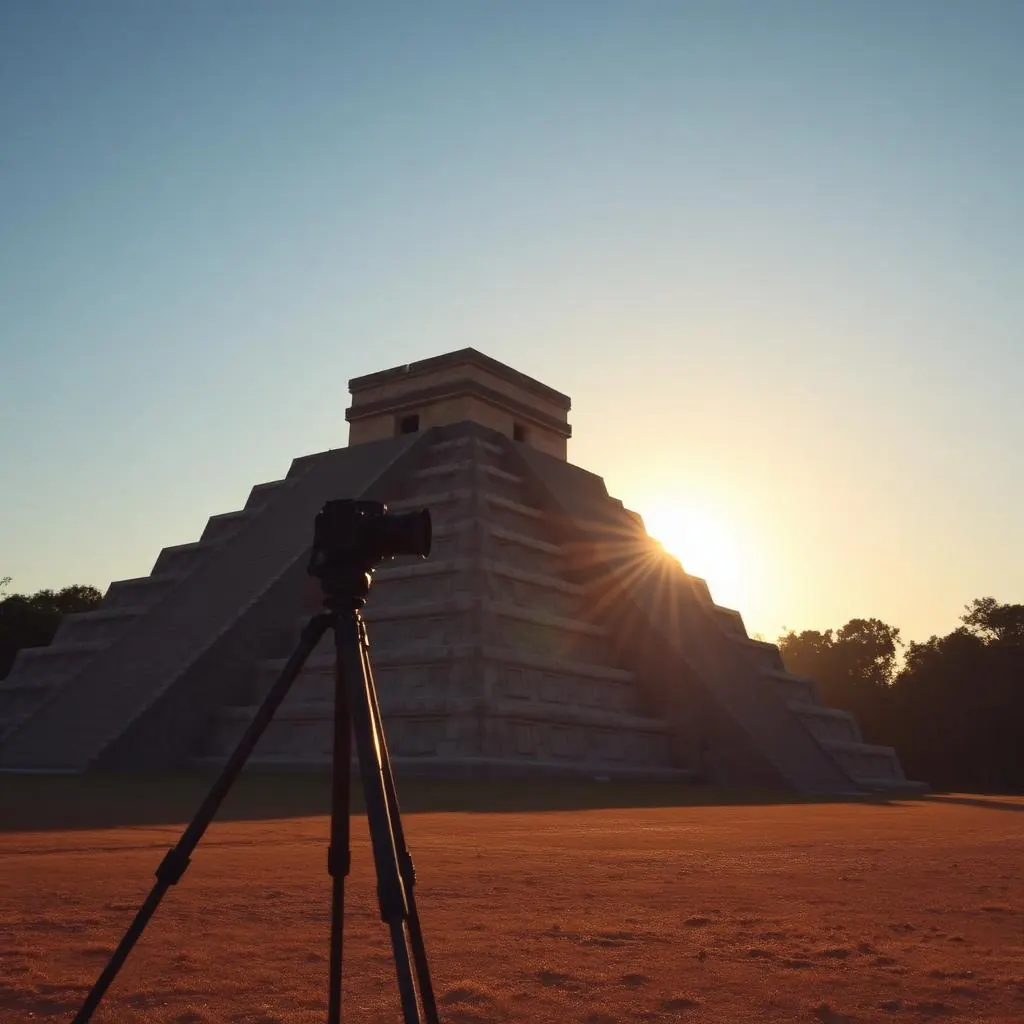
The shadow builds gradually through the afternoon. Arrive by 2:30 PM to secure a viewing spot on the northwest side of the pyramid.
2:30 PM - Arrive & Position
Get to the northwest side of El Castillo. Best angles are 20–40 meters back on the plaza facing the north staircase.
3:00 PM - Effect Begins
First triangles start to form on the balustrade as the sun angle drops.
4:00–4:30 PM - Peak
The full 'serpent' is visible - 7 clear triangles descending to the stone serpent head.
5:00–5:30 PM - Fades
As the sun sets further, the shadow softens and disappears. Site closes around this time.
How Crowded Is Chichen Itza on the Equinox?
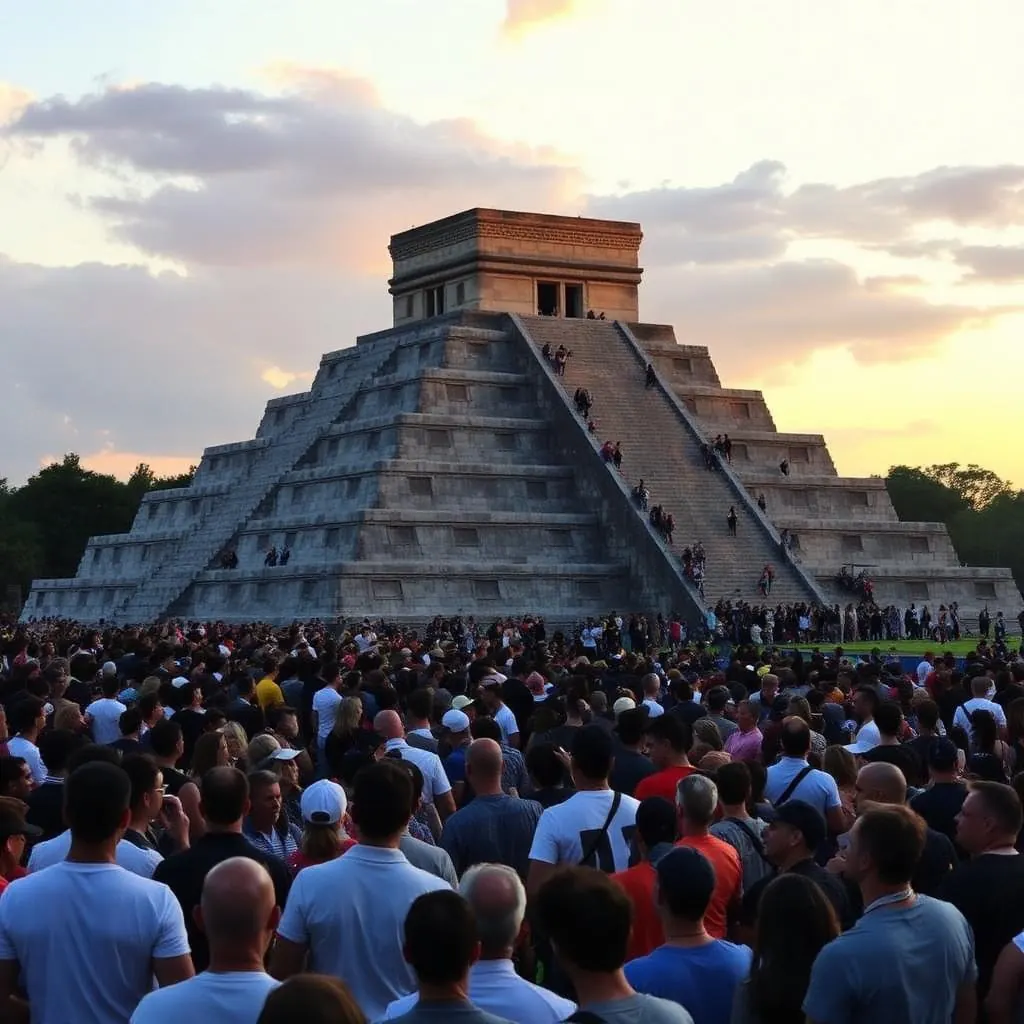
Very. The equinox draws the year's biggest crowds - often 20,000+ people on peak days vs. the daily average of ~7,000. Read our crowd-avoidance guide before committing.
Peak Days
March 20–21 sees 20,000–30,000 visitors - a Yucatecan holiday, so families and school groups come in force.
Autumn Is Quieter
September 21–22 draws roughly a third of the March crowd. Same phenomenon, far more breathing room.
Traffic & Parking
The Cancún–Chichen Itza road is jammed from 10 AM. Parking fills by 11 AM. Leave earlier than you think.
Photography Reality
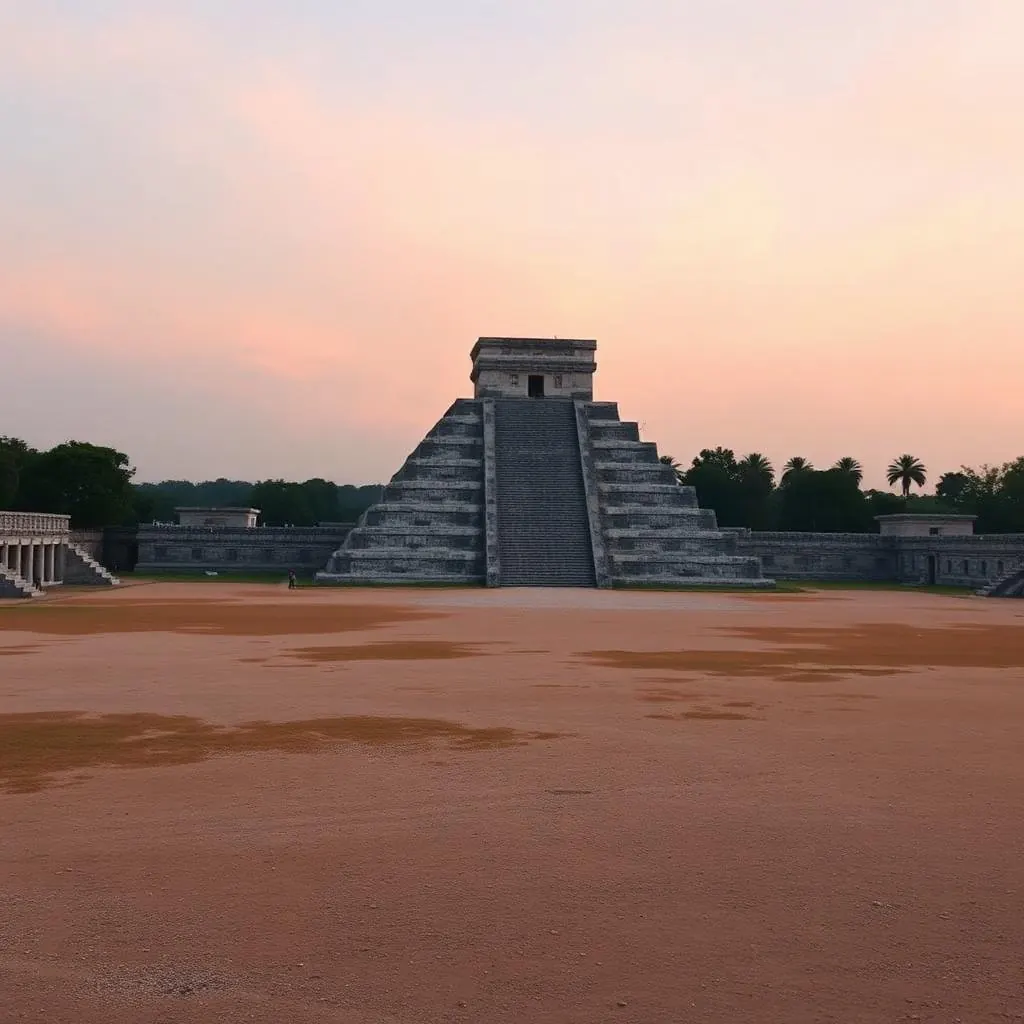
Getting a clean shot of the pyramid without people is nearly impossible on peak day. Focus on the shadow, not the plaza.
The Insider Trick: Visit 2–3 Days Before or After
This is the single most useful piece of advice in this guide. The serpent shadow is visible for about a week around each equinox - and 2–3 days off-peak, the crowds drop 80%.
Same Phenomenon
On March 18 or March 23, the shadow effect is 90–95% as strong as the peak day - the difference is invisible to most viewers.
Vastly Fewer People
March 18 might see 4,000 visitors vs. 25,000 on March 21. Same pyramid, same magic, no chaos.
Better Photos
Elbow room, empty plaza shots, clear angles on the balustrade.
Recommended Windows
Best: March 17–19 or March 22–24 (spring). September 19–20 or September 23–25 (autumn).
Best Viewing Spots at El Castillo
The serpent forms on the north staircase - but not every angle shows it equally well.
Primary Angle: Northwest Plaza
20–40 meters back from the base of the north staircase, slightly to the west side. The classic view.
Photo Angle: Further West
Move 15 m further west for a cleaner shot of the balustrade triangles without the crowd blocking the base.
Avoid the Direct North Center
Straight-on views compress the triangles and reduce the 3D 'serpent' effect. Stay slightly west of center.
Arrive Early for Position
The best spots fill by 2:30 PM on peak days. Bring water, hat and a small folding stool - you'll be standing for hours.
Should You Visit on the Equinox?
Depends on what you value. Read the full is Chichen Itza worth it guide, and combine with our best time to visit recommendations.
Yes If…
You're specifically here for the serpent shadow phenomenon and are willing to trade crowds for a bucket-list moment.
Skip If…
You want empty-plaza photos, a peaceful visit or a comfortable walking experience. The peak day is chaotic.
Best Compromise
Visit 2–3 days before/after the exact equinox. You'll see 90%+ of the effect with 20% of the crowd.
Autumn Over Spring
If your dates are flexible, September's equinox delivers the same magic with a third of the visitors.
How to Plan an Equinox Day at Chichen Itza
The equinox visit needs a completely different plan than a normal Chichen Itza day. Here's the recommended timeline.
6:00 AM - Leave Cancún/Playa
Leave 45 min earlier than usual - equinox traffic on the Cancún road slows to a crawl by 9 AM.
8:30 AM - Arrive
Get in at opening. Explore the site for 2 hours before the peak crowds. Photograph El Castillo now, not at 4 PM.
11:00 AM - Cenote Break
Escape the midday heat with a cenote swim - see our best cenotes guide. Yokdzonot is quieter than Ik-Kil on equinox day.
1:00 PM - Lunch in Pisté
Grab lunch in Pisté (5 min from the site) and rest. Skip the pyramid area during the hottest hours.
2:30 PM - Return for Shadow
Head back to the site and secure your spot on the northwest side of El Castillo.
3:00–5:00 PM - The Serpent
Watch the phenomenon build. Peak effect around 4:00–4:30 PM. Site closes 5:30–6 PM on equinox days.
Equinox at Chichen Itza vs Other Maya Sites
Chichen Itza's shadow is the most famous - but not the only Maya equinox event.
Chichen Itza - Kukulkán Descent
The gold standard. The most complete serpent shadow illusion, best-preserved pyramid, biggest tourist infrastructure.
Dzibilchaltún (Mérida)
The sun rises perfectly through the doorway of the Temple of the Seven Dolls at dawn on the equinox. Free with regular entry, much smaller crowds.
Uxmal
The Pyramid of the Magician catches equinox light differently - less dramatic than Kukulkán but far quieter.
Cobá
No specific equinox event, but the site is open equinox day and stays quiet if Chichen Itza is too much.
Want us to plan your equinox day?
We handle the pre-dawn pickup, tickets, cenote break and the exact viewing timing so you actually see the serpent - no deposit, WhatsApp booking.
Ask us on WhatsApp